
Tesla Paint has a very particular appeal. It looks sleek, modern, and refined straight from the factory, but from our experience working on these vehicles every day, it’s also more delicate than what most drivers are used to. Compared to traditional automotive paint systems, Tesla finishes tend to show wear faster if they’re exposed to harsh conditions without proper protection.
And Florida, unfortunately, is one of the toughest environments for any vehicle’s exterior. Between year-round sun exposure, high humidity, and constant contact with salt air, Tesla owners here face a combination of factors that can accelerate paint deterioration much faster than in other states. Whether you’re parked under the Miami sun, commuting through Orlando traffic, or living near the coast in places like Tampa or Fort Lauderdale, your Tesla Paint is constantly being tested.
What we want to do in this article is break that down clearly. Not just what’s happening to your paint, but why it happens, and more importantly, what you can realistically do about it. Because protecting Tesla Paint in Florida isn’t about overthinking it, it’s about making smart, informed decisions that actually hold up long-term.
What Makes Tesla Paint Different from Traditional Automotive Paint
Tesla Paint isn’t necessarily “worse” than traditional paint, but it is engineered differently, and that difference matters a lot in a place like Florida.
Most Tesla vehicles use a thinner clear coat compared to many legacy manufacturers. This is partly due to eco-friendly paint processes and production efficiency, which is something Tesla has prioritized. The result is a finish that looks great, but has less material to absorb environmental stress over time.
From a technical standpoint, here’s what stands out:
- A thinner Tesla clear coat means less resistance to micro-abrasions and UV exposure
- Eco-conscious paint processes can result in softer finishes
- Lower overall paint thickness impacts long-term paint durability
- Surface imperfections like swirl marks and light scratches tend to appear more easily
This is why Tesla paint protection becomes such an important conversation early on. Without some form of added protection, the paint is simply more exposed to everything Florida throws at it, from sun damage to airborne contaminants. And once that clear coat starts to degrade, restoring it becomes much more time-consuming and costly.
Florida Sun Exposure and UV Damage on Tesla Paint
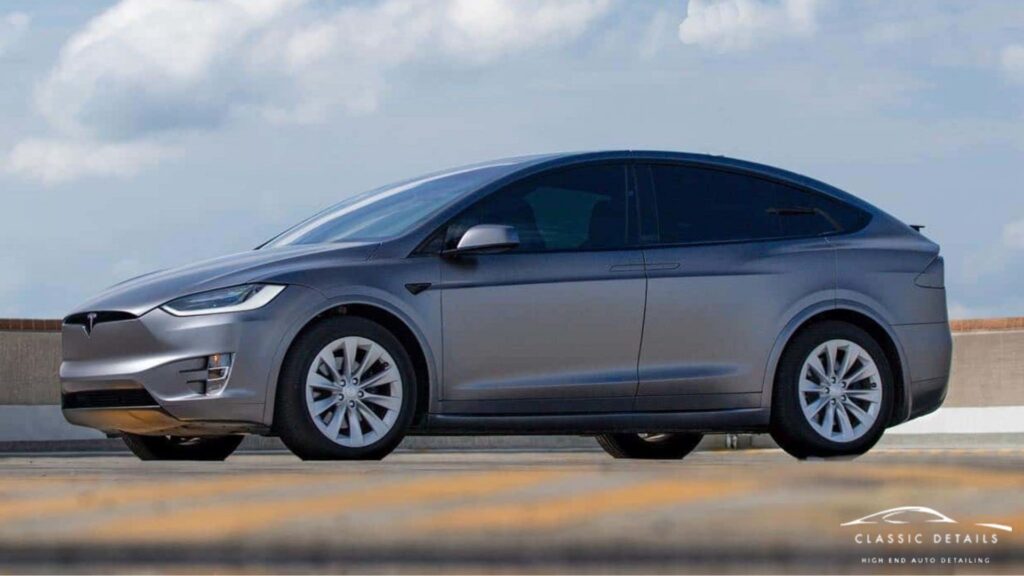
If there’s one factor that consistently impacts Tesla Paint in Florida, it’s the sun. The UV index here is high almost year-round, and that constant exposure slowly breaks down the surface of your vehicle.
In cities like Miami, where cars are often parked outdoors, or Orlando, where daily commuting means long hours under direct sunlight, we see the same pattern over and over again. The clear coat begins to lose its depth, the color starts to fade, and over time, oxidation becomes visible.
This kind of damage doesn’t happen overnight, but it builds gradually:
- UV rays weaken the Tesla clear coat structure
- Paint fading becomes noticeable, especially on darker colors
- Oxidation creates a dull, chalky appearance on the surface
- Heat buildup accelerates the breakdown of protective layers
That’s why UV protection for Tesla paint isn’t just a “nice to have” in Florida, it’s essential. Without it, even a newer Tesla can start showing signs of wear much earlier than expected. And once sun damage sets in, correcting it requires polishing or paint correction, which removes even more of that already thin clear coat.
Humidity, Salt Air, and Coastal Impact on Tesla Paint
Florida humidity doesn’t just sit in the air, it interacts with your vehicle constantly. When that moisture settles on Tesla Paint, it creates a surface where contaminants don’t just land, they stick. And once they stick, they begin to affect the finish much faster than most owners expect.
In coastal areas like Tampa, Naples, and Fort Lauderdale, this effect becomes more aggressive due to salt air. Even if you’re not right on the beach, salt particles travel, settle on the paint, and combine with humidity to slowly break down the surface.
What we typically see over time is a pattern of gradual but consistent impact:
- Salt air damage to car paint increases corrosion risk on exposed areas
- Moisture holds contaminants against the surface for longer periods
- Water spots and mineral deposits become harder to remove
- Surface contamination builds faster, reducing overall paint protection in Florida
This is one of those situations where the damage isn’t always visible right away. The car can look clean, but the Tesla Paint is already dealing with buildup that, if left untreated, starts to compromise the finish layer by layer.
Road Conditions and Everyday Wear in Florida
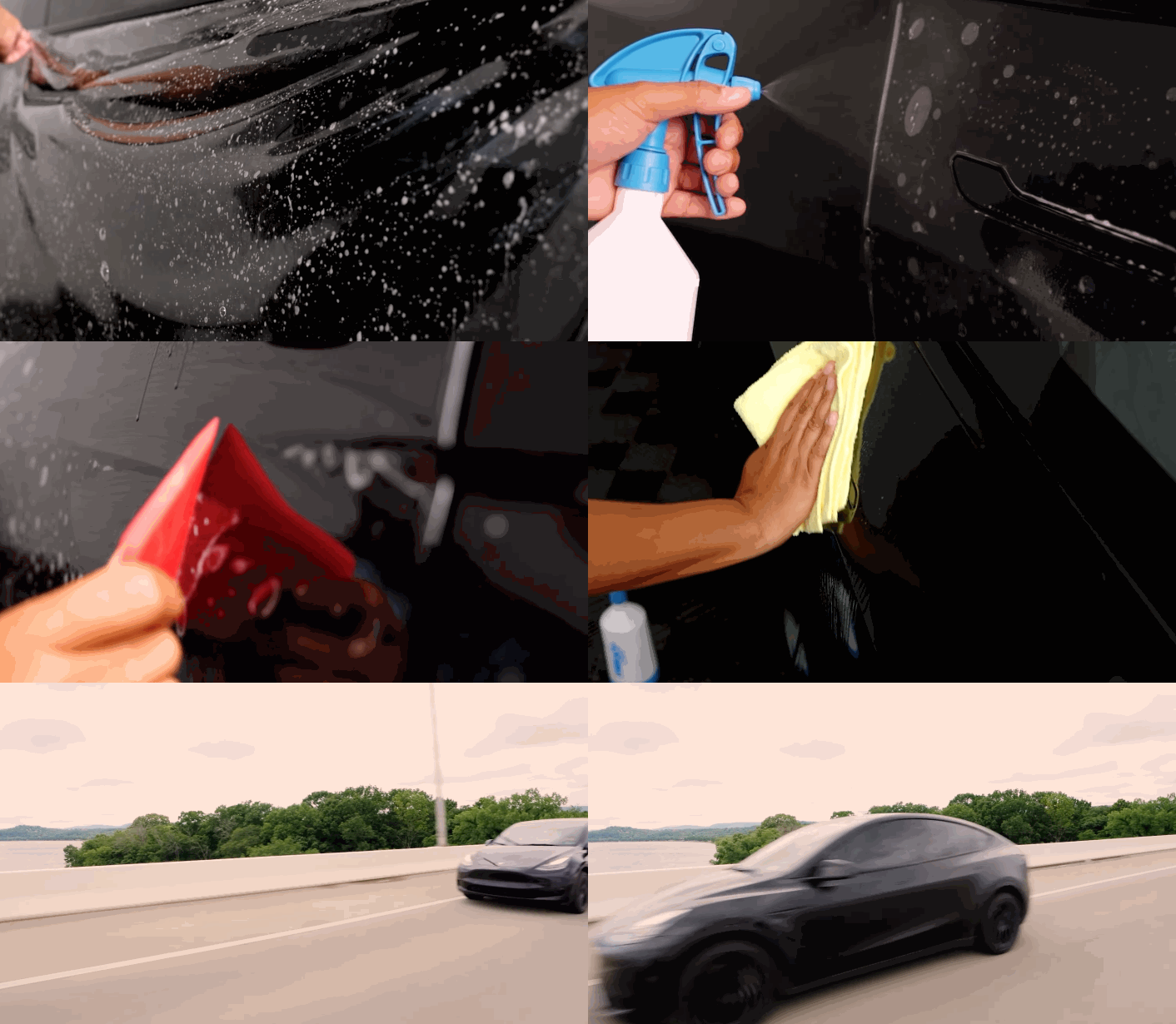
Now, separate from climate, there’s the simple reality of driving in Florida. Every time you take your Tesla out, especially on major highways, you’re exposing the paint to physical contact that adds up over time.
Think about daily routes across I-95, I-75, or the Florida Turnpike. These are high-speed environments with constant traffic, construction activity, and loose debris. Add sand from coastal areas into the mix, and you get a steady stream of impact hitting the most exposed parts of the vehicle.
Instead of just listing the damage, it’s easier to visualize where and how it happens:
Front-end exposure tends to take the biggest hit. The bumper, hood, and mirrors are constantly dealing with rock chips and debris at speed. Side panels and lower areas are more prone to sand abrasion and fine scratching, especially near beach zones. Overall surface wear builds gradually, often showing up as dullness, micro-scratches, and reduced paint clarity.
This is exactly why solutions like paint protection film Tesla owners choose are focused on high-impact zones. You can’t change Florida roads, but you can control how much of that daily wear actually reaches your Tesla Paint, and over time, that decision makes a very noticeable difference.
Protective Solutions: What Actually Works for Tesla Paint in Florida
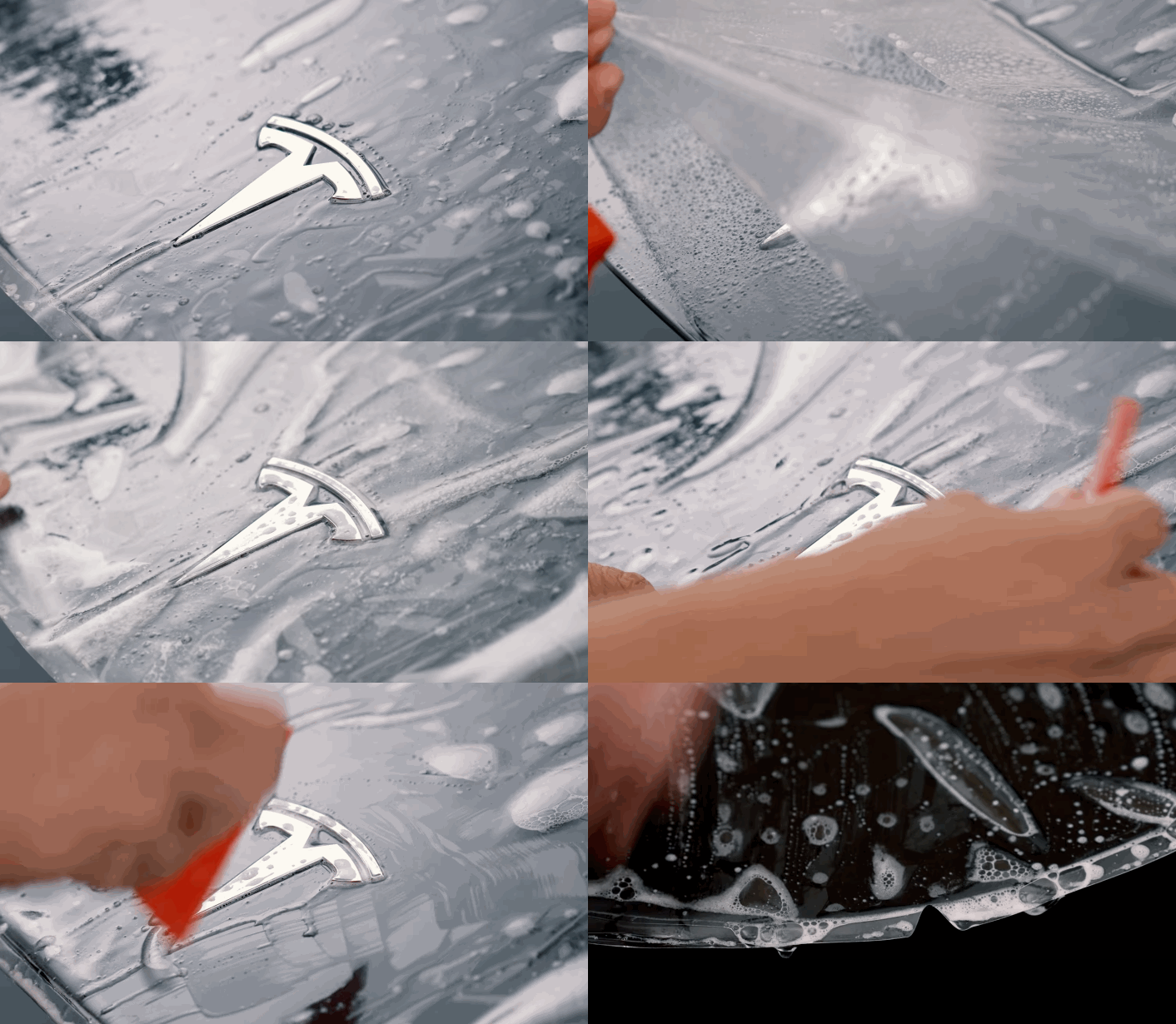
By the time most Tesla owners come to us, they’ve already noticed early signs of wear, light scratches, water spots, or that subtle loss of gloss. The reality is that in Florida, protecting Tesla Paint isn’t optional if you want it to hold up long-term. It’s about putting the right systems in place before the damage compounds.
There are three main approaches that actually make a difference when it comes to long-term paint protection, and each one plays a specific role depending on how you use your vehicle:
- Ceramic coating Tesla applications create a hydrophobic layer that repels water, reduces contamination, and adds UV resistance
- Paint protection film Tesla solutions act as a physical barrier against rock chips, sand, and road debris
- Consistent maintenance routines help preserve both the paint and any protection already applied
What matters is understanding how these work together. Ceramic coatings help with sun damage protection and make the car easier to clean, while paint protection film provides impact resistance where Florida roads tend to be most aggressive. When combined properly, they create a much more complete long-term paint protection strategy.
At Classic Details Auto Spa, this is exactly how we approach Tesla paint protection. Not as a one-size-fits-all service, but as a tailored solution based on how and where the vehicle is driven across Florida.
Conclusion: Protecting Your Tesla Paint Is a Long-Term Investment
Florida’s climate doesn’t give Tesla Paint much room for error. Between constant UV exposure, humidity, salt air, and daily road wear, the paint is always under pressure. Over time, that exposure adds up, and without protection, the finish will inevitably start to show it.
The good news is that with the right approach, you can stay ahead of that damage. Combining solutions like ceramic coating, paint protection film, and proper maintenance creates a system that not only preserves the look of your Tesla, but also protects its long-term value.
From what we’ve seen working with Tesla owners across Florida, the difference is clear. Vehicles that are properly protected early on maintain their finish, require less correction over time, and simply age better in this environment.
At Classic Details Auto Spa, we specialize in helping Tesla owners protect their investment the right way. If you’re looking for a solution that actually holds up in Florida conditions, contact us today and we’ll walk you through the best Tesla Paint protection strategy for your vehicle.