
Florida drivers deal with sunlight almost every single day of the year, and over time, that exposure changes the way a vehicle feels, looks, and even ages. Cars parked outside in Miami, sitting in traffic around Orlando, or driving along coastal roads near Tampa spend hours absorbing direct heat through untreated glass without most owners realizing how much is actually entering the cabin.
The surprising part is that vehicle windows don’t block nearly as much heat as people assume. Sunlight passes through the glass, builds inside the cabin, and creates a trapped heat effect that quickly raises interior temperatures. At the same time, UV rays continuously hit dashboards, seats, door panels, and steering wheels day after day.
That’s one of the reasons window tint has become far more practical than cosmetic in Florida. A quality automotive window tint setup helps manage interior temperatures while also acting as a layer of protection against constant sun exposure.
At Classic Details Auto Spa, we spend a lot of time helping drivers understand the difference between standard film and real performance-focused solutions like heat blocking window tint and advanced UV protection window film technologies. Once drivers experience the difference during a Florida summer, it usually changes how they look at tint altogether.
Why Heat Builds Up So Quickly Inside Florida Vehicles
Vehicle cabins trap heat much faster than most people expect, especially under Florida conditions. The process starts the moment sunlight passes through the glass and hits interior surfaces.
The Glass Lets Heat In, But Doesn’t Let It Escape Easily
Sunlight enters through windows as shortwave radiation. Once it reaches seats, dashboards, carpeting, and interior panels, that energy converts into heat and becomes trapped inside the cabin. This is why a parked car can feel dramatically hotter than the temperature outside.
Humidity makes the effect even heavier. In Florida, moisture in the air slows down how quickly heat dissipates, causing the cabin to hold warm air longer than it would in drier climates.
Certain Interior Features Make It Worse
Some vehicle features intensify car interior heat significantly:
- Dark dashboards absorb sunlight aggressively
- Leather seats retain heat for long periods
- Large windshields increase solar exposure
- Panoramic roofs create additional heat entry points
- Compact parking areas reflect sunlight back toward the vehicle
Traffic patterns also matter. Slow-moving traffic around Miami, Tampa, or I-4 near Orlando leaves drivers exposed to direct sunlight longer throughout the day. That’s why many people eventually start looking into cabin heat reduction and stronger Florida heat protection solutions for their vehicles.
How Window Tint Helps Block Heat
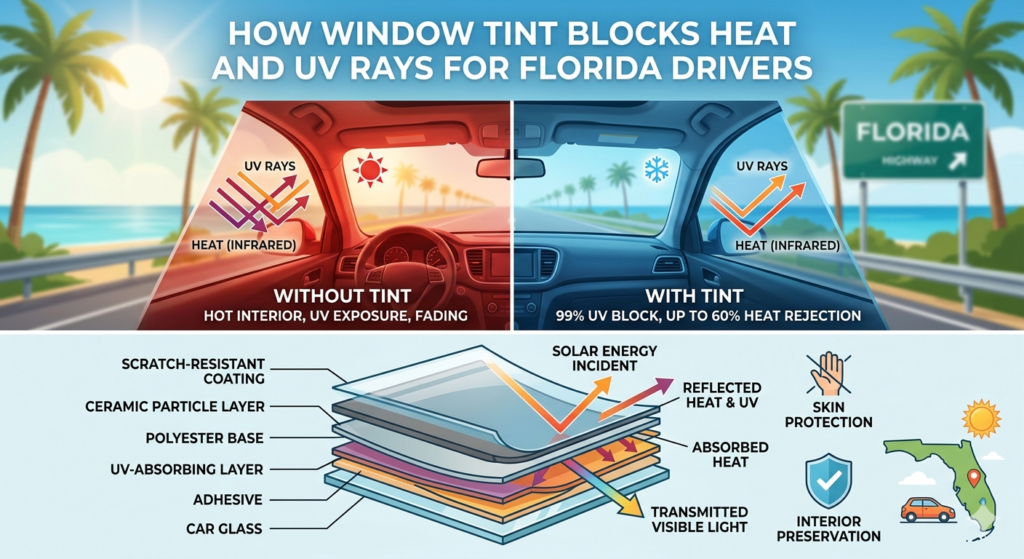
The biggest misconception about window tint is that darker glass automatically means better cooling. In reality, heat management has much more to do with how the film handles solar energy than how dark it looks from the outside.
Modern tint technology is designed to reduce the amount of heat entering through the windows before it has a chance to build inside the cabin. The most important part of that process is infrared heat rejection. Infrared rays are responsible for a large portion of the heat drivers physically feel while sitting inside the vehicle.
What Modern Heat-Rejecting Films Actually Do
- Reduce the amount of solar energy entering through the glass
- Limit infrared heat buildup during long sun exposure
- Improve driving comfort without always requiring extremely dark film
- Help maintain more stable cabin temperatures throughout the day
- Reduce glare while preserving visibility from inside the vehicle
Different films handle heat differently, especially during Florida summers. Basic dyed films may improve appearance, but higher-performance options like ceramic window film are engineered specifically for stronger solar heat rejection and more consistent long-term performance.
At Classic Details Auto Spa, helping drivers compare real-world heat rejection window tint performance is one of the most important parts of the process. In Florida, choosing the right film often matters more than choosing the darkest one.
Understanding UV Rays and Why They Matter for Drivers
Heat usually gets most of the attention during summer, but UV exposure creates a completely separate problem for vehicles in Florida.
Ultraviolet rays are invisible, which makes them easy to ignore, but their long-term effects become obvious over time. Constant exposure slowly breaks down interior materials, fades surfaces unevenly, and dries out components that spend years sitting under direct sunlight.
The Damage Adds Up Gradually
Unlike sudden heat buildup, UV damage happens little by little:
- Dashboards begin fading or discoloring
- Leather seats lose softness and develop cracks
- Plastic trim becomes brittle over time
- Screens and glossy surfaces show premature wear
- Steering wheels lose original texture and finish
Florida intensifies this process because sunlight remains strong during nearly every season. Coastal reflection, year-round UV levels, and prolonged outdoor parking create more exposure than many drivers experience in other parts of the country.
That’s where a quality UV blocking window tint becomes valuable beyond comfort alone. A strong UV protection film helps protect vehicle interior materials from years of cumulative sun damage while making daily driving more comfortable at the same time.
Signs Your Vehicle Is Getting Too Much Sun Exposure
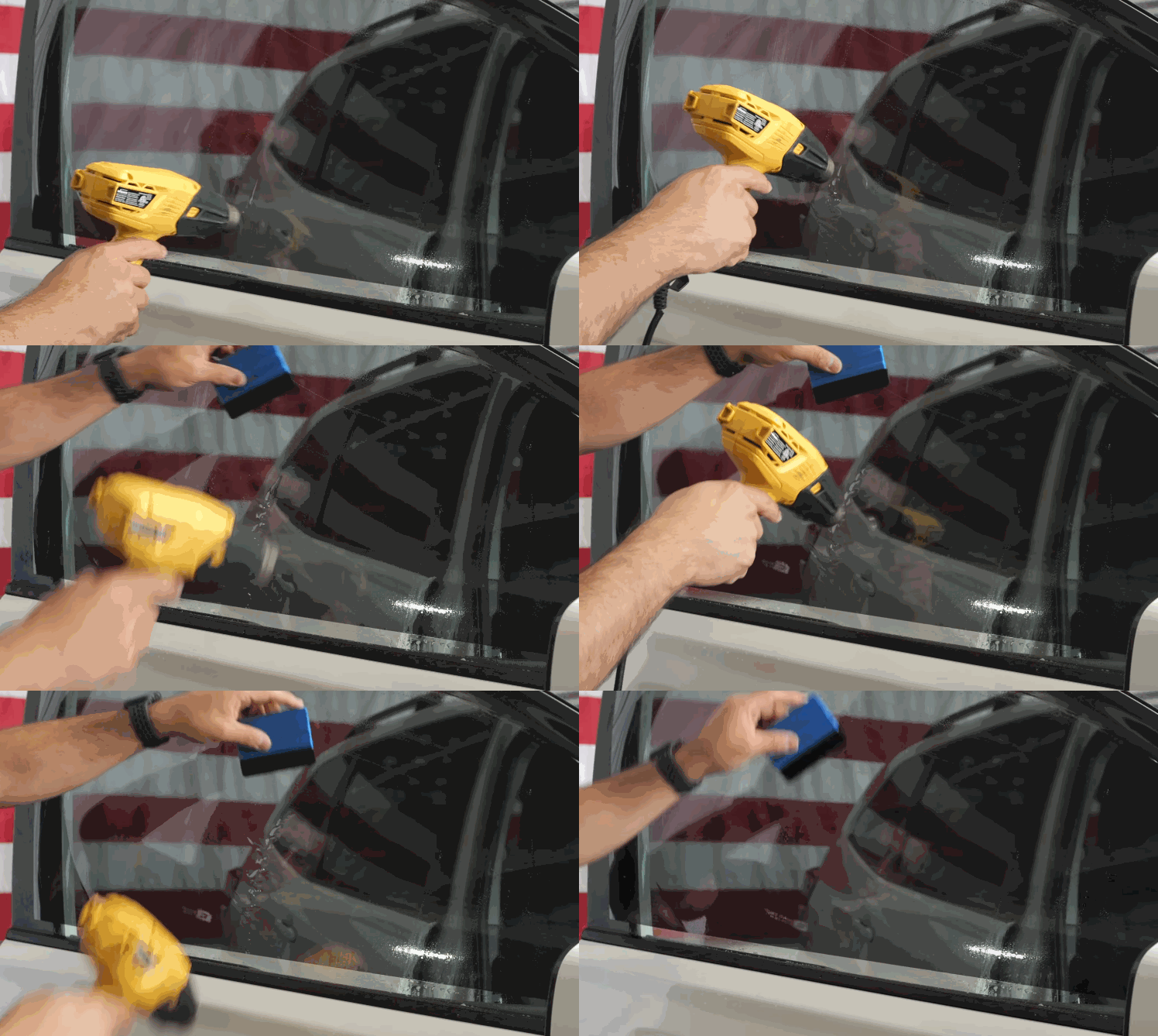
Sun damage inside a vehicle usually starts with small warning signs before becoming a much larger comfort and preservation problem. Many Florida drivers notice these symptoms long before realizing how much untreated glass is contributing to the issue.
- The steering wheel stays painfully hot after sitting outside
- Dashboard materials start fading or changing color unevenly
- Leather or vinyl seats feel excessively warm during daytime driving
- The AC system struggles to cool the cabin quickly
- Bright sunlight creates uncomfortable glare during commutes
- Interior trim looks dry, brittle, or prematurely aged
- The cabin heats back up quickly every time the vehicle stops moving
These are some of the most common reasons drivers begin researching car window tint Florida solutions and professional automotive window tinting services. In a state where vehicles spend so much time exposed to direct sunlight, small heat and UV problems rarely stay small for very long.
The Importance of Professional Window Tint Installation
A quality film can lose a lot of its value when the installation itself is done poorly. Even strong-performing window tint can end up looking uneven, failing early, or developing visible defects if the process isn’t handled carefully from the beginning.
Florida makes installation even more demanding because humidity affects how film settles and cures against the glass. Moisture in the air, dust contamination, and improper curing conditions can all impact the final result long after the vehicle leaves the shop.
At Classic Details Auto Spa, we’ve seen plenty of vehicles come in after low-quality installations started failing within months, especially during peak summer conditions.
Small Installation Details Make a Big Difference
- Dust trapped beneath the film creates visible imperfections
- Poor edge finishing can lead to lifting corners over time
- Incomplete curing may cause hazy spots or adhesion issues
- Humid conditions increase the risk of bubbling if installation is rushed
- Uneven alignment affects both appearance and long-term durability
Most of the common problems drivers associate with bad tint, bubbling, peeling, purple discoloration, or uneven edges, usually trace back to installation quality rather than the film itself. That’s why a proper professional window tint installation matters just as much as choosing the right product.
Experienced window tinting services understand how to control those variables before they become expensive problems later.
Why Local Experience Matters for Window Tint in Florida
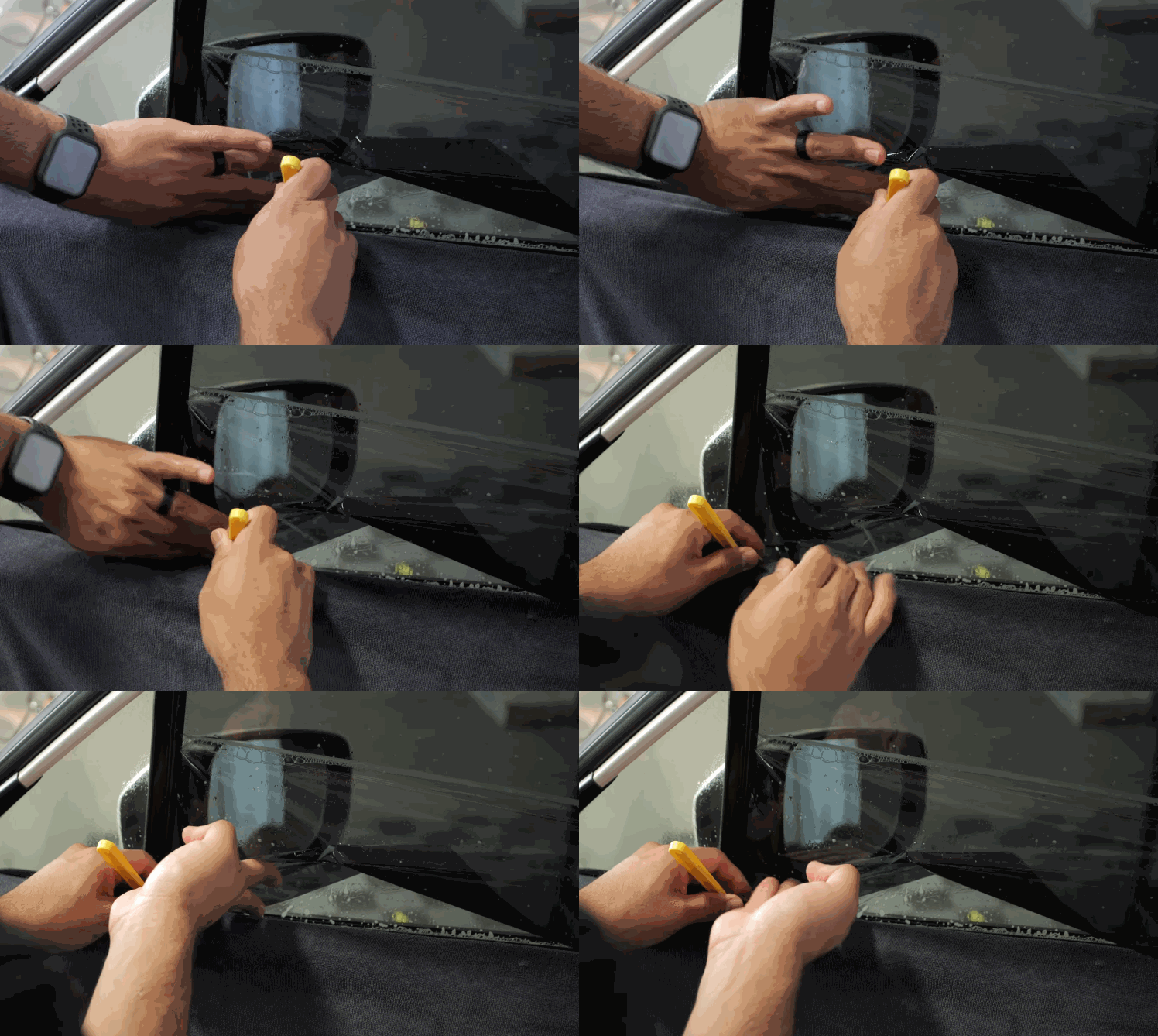
Florida conditions create challenges that many installers outside the state rarely encounter. Year-round sun exposure, high humidity, coastal salt air, and consistently strong UV levels all affect how tint performs over time.
Because of that, recommendations that work well in cooler climates don’t always translate properly here.
A local installer understands how Florida weather changes curing conditions, affects long-term durability, and influences visibility needs during everyday driving. Coastal humidity alone can impact installation quality when shops fail to properly control the environment during the application process.
Local Knowledge Changes the Results
- Film performance varies significantly under constant Florida UV exposure
- Humidity affects curing and long-term adhesion
- Coastal reflection increases sunlight intensity near beaches and highways
- Florida driving patterns create longer heat exposure periods than many states
There’s also a noticeable difference between general installers and true local window tint experts who regularly work with Florida-specific conditions. Experience in this climate helps determine which products actually hold up after years of exposure instead of simply looking good on day one.
At Classic Details Auto Spa, our approach to window tinting services Florida comes from years of seeing how different films behave in real local conditions. That perspective helps us guide drivers toward solutions that fit both the environment and the way they actually use their vehicles.
Choosing the Right Window Tint for Florida Driving
Not every Florida driver deals with sunlight the same way. The ideal window tint setup often depends on where the vehicle spends most of its time and how it’s driven throughout the week.
Highway Drivers
Long highway commutes create extended periods of direct sunlight exposure, especially on roads like I-75, Florida’s Turnpike, and I-95. Drivers spending hours behind the wheel usually prioritize stronger heat rejection and glare reduction because cabin temperatures build steadily during longer trips.
For these vehicles, high-performance car window tint options focused on comfort tend to make the biggest impact.
City Commuters
Traffic-heavy areas like downtown Orlando, Tampa, and Miami create a different kind of heat exposure. Cars spend more time idling under direct sun while surrounded by reflective pavement and nearby vehicles.
This is where many drivers start looking for a balance between visibility, comfort, and practical everyday cooling performance.
Coastal Drivers
Vehicles near the coast deal with additional environmental stress. Salt air, humidity, and strong sunlight reflecting off water increase overall exposure levels throughout the year.
Drivers in areas like Naples, Fort Lauderdale, and Clearwater often need films that prioritize durability and long-term performance under constant sun exposure.
Florida tint laws also influence what makes sense for each vehicle. Staying compliant with legal window tint Florida regulations matters, particularly when balancing visibility and heat rejection on front windows.
At Classic Details Auto Spa, helping drivers choose tint based on real driving habits is a major part of the process. Different vehicles, commutes, and exposure levels often require very different recommendations.
Conclusion: Protect Your Vehicle From Florida Heat and UV Exposure
Florida sunlight affects vehicles every day, not just during the peak of summer. Heat buildup, harsh glare, and constant UV exposure gradually impact driving comfort and interior condition far more than many drivers initially realize.
The right window tint helps control those conditions by reducing solar heat, blocking damaging UV rays, and creating a more comfortable cabin during everyday driving. Over time, it also helps preserve interior materials and reduce some of the long-term wear caused by constant sun exposure.
At the same time, long-term results depend heavily on choosing the right film and having it installed correctly. Performance, durability, and appearance all rely on installation quality just as much as the tint itself.
At Classic Details Auto Spa, we help drivers find practical solutions based on Florida conditions, vehicle type, and daily driving habits. Whether the goal is stronger heat rejection, UV protection, or a more comfortable commute, our team is here to help.
Contact Classic Details Auto Spa today to learn more about our professional window tinting services and get recommendations tailored specifically to your vehicle and driving needs.