
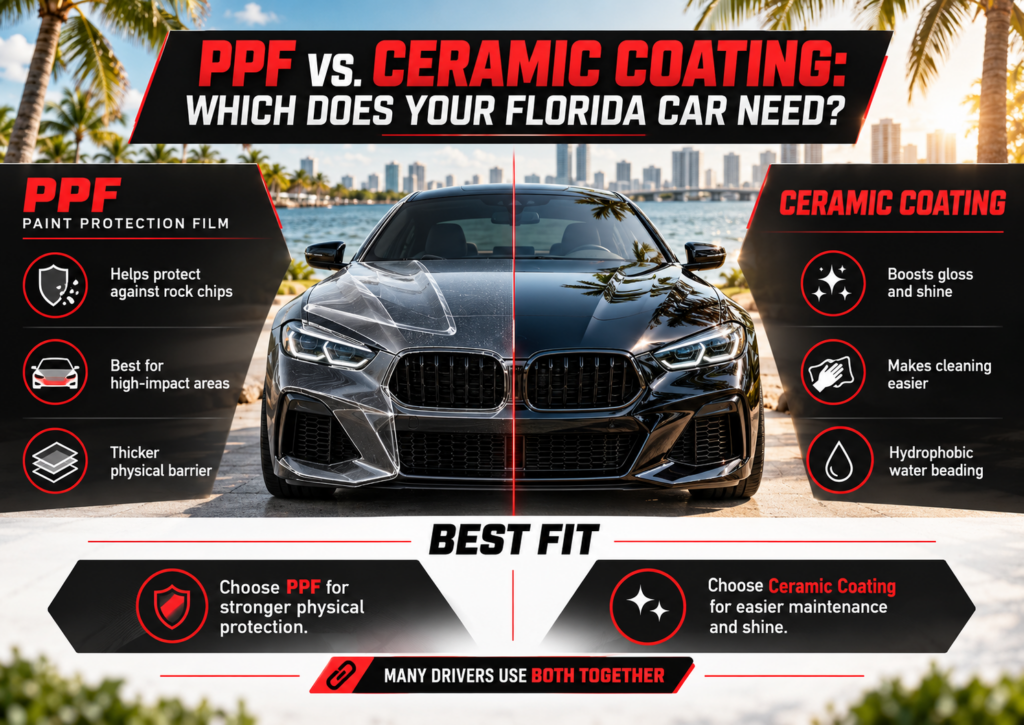
Paint protection film (PPF) is the better choice for Florida drivers who want to protect their vehicles against rock chips, scratches, and road debris, while ceramic coating is ideal for easier cleaning, improved gloss, and resistance to environmental contamination. Both protect your vehicle in different ways, and the right option depends on your driving habits, parking conditions, and the type of damage you’re trying to prevent.
For Orlando drivers, daily highway exposure, intense sunlight, frequent rain, and insects make both services worth considering. However, understanding what each product actually does is essential before investing in either one.
What Is the Main Difference Between PPF and Ceramic Coating?
The main difference between PPF and ceramic coating is that PPF provides a physical barrier against impacts, while ceramic coating creates a protective surface that makes contaminants easier to remove. They aren’t interchangeable products, even though both are commonly marketed as automotive paint protection.
Paint protection film is a transparent, flexible urethane film installed directly over painted panels. Its thickness allows it to absorb minor impacts from small stones and road debris that could otherwise chip the clear coat or paint.
Ceramic coating, on the other hand, is a liquid-applied protective product that cures into a thin, chemically resistant layer. It enhances gloss, creates hydrophobic properties, and helps reduce how strongly dirt and environmental contaminants adhere to the surface.
The practical differences include:
- Rock chip protection: PPF is designed to absorb minor impacts, while ceramic coating offers little meaningful protection against rock chips.
- Surface scratches: Many modern PPF products have self-healing topcoats that can reduce the appearance of light surface marks when exposed to heat.
- Cleaning: Ceramic coating makes routine washing easier by reducing contaminant adhesion and improving water behavior.
- Appearance: Both can preserve or enhance the vehicle’s finish, although ceramic coating is particularly valued for gloss and slickness.
- Coverage: PPF is often installed on selected high-impact panels, while ceramic coating can be applied across most painted exterior surfaces.
At Classic Details Auto Spa, we approach the PPF vs ceramic coating decision by identifying what the owner wants to protect against. A product designed to resist impacts serves a different purpose from one primarily intended to improve surface performance and maintenance.
Why Does Paint Protection Film Make Sense for Florida Drivers?
Paint protection film makes sense for Florida drivers because it helps shield vulnerable painted surfaces from rock chips, road debris, minor abrasions, and everyday driving damage. These hazards are particularly relevant for vehicles that regularly travel at highway speeds throughout Central Florida.
Road construction, loose gravel, and debris thrown by surrounding traffic can affect vehicles traveling on I-4, SR-408, SR-417, and Florida’s Turnpike. Even small stones can leave visible chips on a front bumper or hood, especially when a vehicle accumulates substantial highway mileage.
Which Areas Benefit Most From PPF?
The front bumper, hood, front fenders, and side mirrors generally receive the most direct exposure to airborne debris. Rocker panels and lower doors can also experience damage from material kicked up by the tires.
For many daily drivers, full front PPF offers a practical balance between protection and coverage. It typically includes the front bumper, complete hood, front fenders, and side mirrors.
Owners of luxury vehicles, performance cars, or vehicles they intend to keep for many years may prefer full body PPF for more comprehensive coverage.
Another advantage is that many modern films include self-healing technology. Light surface marks affecting the film’s topcoat may become less noticeable with warmth, although deeper cuts and significant impacts can still damage the material.
Professional PPF installation is particularly important because the film must follow the vehicle’s body lines, maintain clean edges, and provide consistent coverage without unnecessary seams or visible imperfections.
What Does Ceramic Coating Protect Against in Florida?
Ceramic coating helps protect Florida vehicles against environmental contamination, UV-related exposure, and everyday surface buildup while making routine washing easier. Its main advantage isn’t stopping physical impacts but improving how the exterior finish responds to water, dirt, and contaminants.
Florida’s climate creates several challenges for maintaining a clean vehicle. Frequent afternoon storms can leave residue behind as water evaporates, while insects, bird droppings, pollen, and road grime accumulate on the paint between washes.
A professionally installed automotive ceramic coating can help address these conditions in several ways.
Easier Removal of Road Grime and Insects
A coated surface generally allows dirt and contaminants to release more easily during washing. This can be particularly useful after highway driving around Orlando, where insect residue often collects on front bumpers and mirrors.
However, ceramic coating doesn’t make the paint immune to staining or chemical damage. Contaminants should still be removed promptly.
Improved Water Behavior
The hydrophobic properties of ceramic coating encourage water to bead and move across the surface more readily. This can make cleaning and drying more convenient, although water spots can still form when droplets evaporate and leave mineral deposits behind.
Maintaining the Exterior Finish
Quality coatings provide chemical resistance and can help reduce environmental wear on the paint. They also enhance the finish’s appearance, making the vehicle look glossier and easier to maintain between washes.
At Classic Details Auto Spa, we consider professional ceramic coating application particularly useful for Orlando owners who want to spend less time fighting stubborn grime while maintaining their vehicle’s appearance.
Is PPF or Ceramic Coating Better for Florida Heat and Humidity?
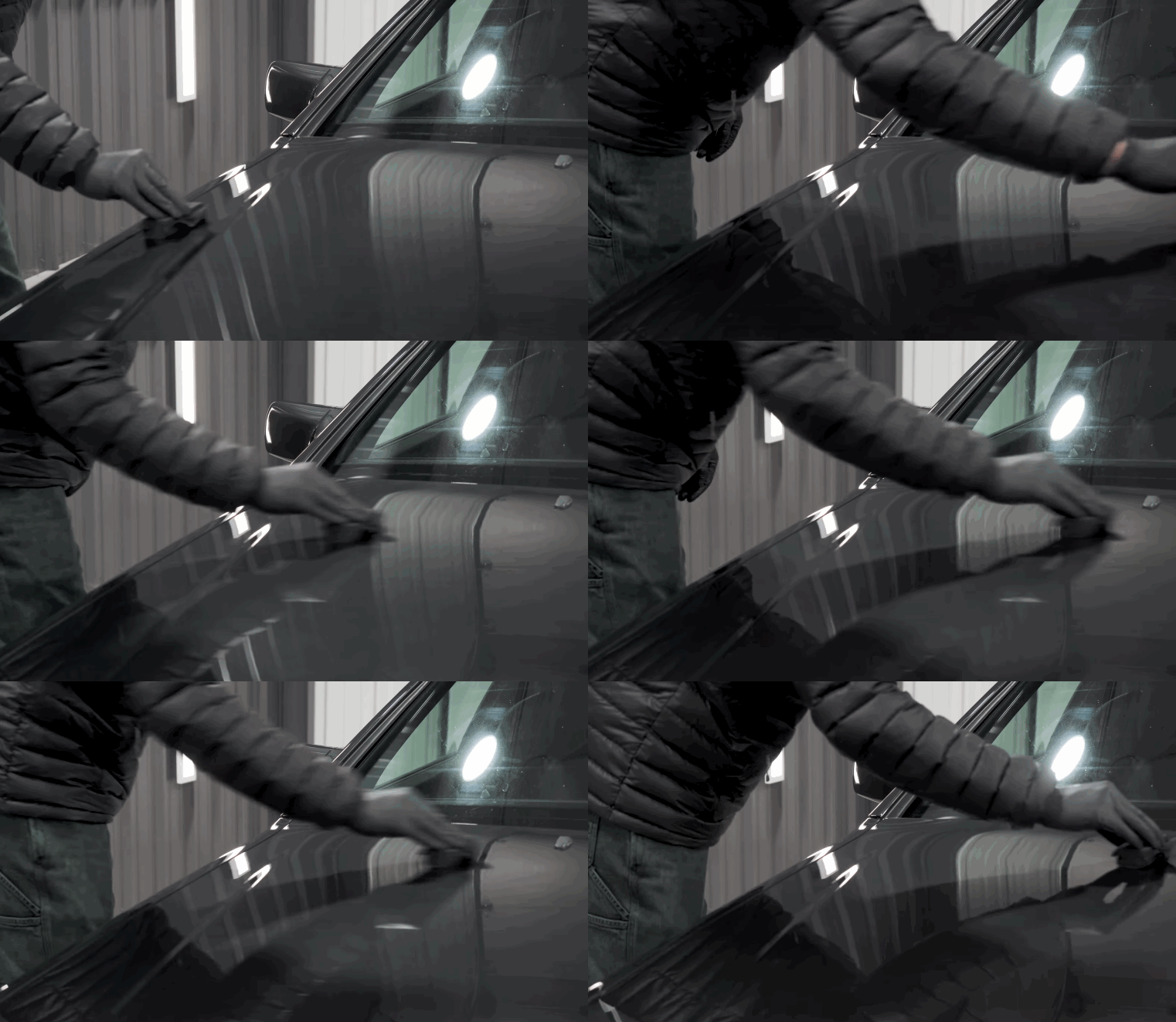
Ceramic coating is generally more useful for managing the cleaning challenges associated with Florida’s heat, humidity, and frequent rain, while PPF is better for protecting paint against physical road damage. Neither product eliminates the effects of Florida’s climate, but each addresses different ownership concerns.
Heat alone isn’t the main reason to choose PPF. Its strongest advantage is the physical protection it provides against debris and minor abrasions. Quality automotive films are engineered to withstand outdoor exposure, but they still require maintenance and can deteriorate over time.
Ceramic coating offers a different benefit. During Orlando’s rainy season, its hydrophobic surface can make washing and drying more manageable. It also helps reduce how strongly certain contaminants adhere to the paint, which is useful when intense sunlight makes neglected residue more difficult to clean.
For vehicles parked outdoors, both products can have value. The deciding factor is whether the owner is more concerned about preventing chips and scratches or maintaining a cleaner, easier-to-wash finish.
A car that spends hours commuting on I-4 may benefit most from protecting its front end with PPF. A vehicle primarily used for local driving and parked outside may benefit considerably from ceramic coating, particularly when easier maintenance is the main priority.
Can You Apply Ceramic Coating Over Paint Protection Film?
Yes, ceramic coating can be applied over paint protection film, allowing Florida drivers to combine physical impact protection with easier cleaning and improved surface performance. This combination is particularly useful for owners who want to protect vulnerable panels without sacrificing the convenience of a hydrophobic finish.
PPF serves as the first line of defense against rock chips, minor abrasions, and road debris. Ceramic coating adds a protective surface that can make insect residue, dirt, and other contaminants easier to remove.
For Orlando drivers, combining these services can be especially practical on vehicles that frequently travel along I-4, SR-417, or Florida’s Turnpike.
However, not every ceramic coating is suitable for every film. Product compatibility, surface preparation, and the manufacturer’s application requirements must be considered before installation.
At Classic Details Auto Spa, we evaluate the condition of the film and the owner’s maintenance expectations before recommending ceramic coating over PPF. The goal is to create a protection system that works together rather than adding products simply because they’re available.
How Much Maintenance Do PPF and Ceramic Coating Require?
Both PPF and ceramic coating require regular washing and proper care, although ceramic coating generally makes routine cleaning easier while PPF provides additional resistance to physical damage. Neither product should be considered maintenance-free.
The care requirements are relatively straightforward:
- Wash regularly: Remove dirt, road film, insects, and environmental contamination before buildup becomes difficult to clean.
- Use compatible products: Choose automotive shampoos and cleaning products appropriate for the installed film or coating.
- Avoid aggressive washing: Harsh brushes, abrasive materials, and improper washing techniques can damage protective surfaces.
- Remove contaminants promptly: Bird droppings, insect residue, and mineral deposits should not remain on the vehicle unnecessarily.
- Inspect the protection: Check PPF edges for lifting and monitor ceramic coating performance for signs of contamination or reduced hydrophobic behavior.
For Florida vehicles, maintenance frequency should reflect actual exposure. A garage-kept weekend car generally accumulates less contamination than an outdoor-parked daily driver traveling through Orlando traffic.
Professional installation also comes with product-specific curing and aftercare instructions. Following those recommendations is important, particularly during the initial period after PPF installation or ceramic coating application.
Is PPF or Ceramic Coating More Cost-Effective?
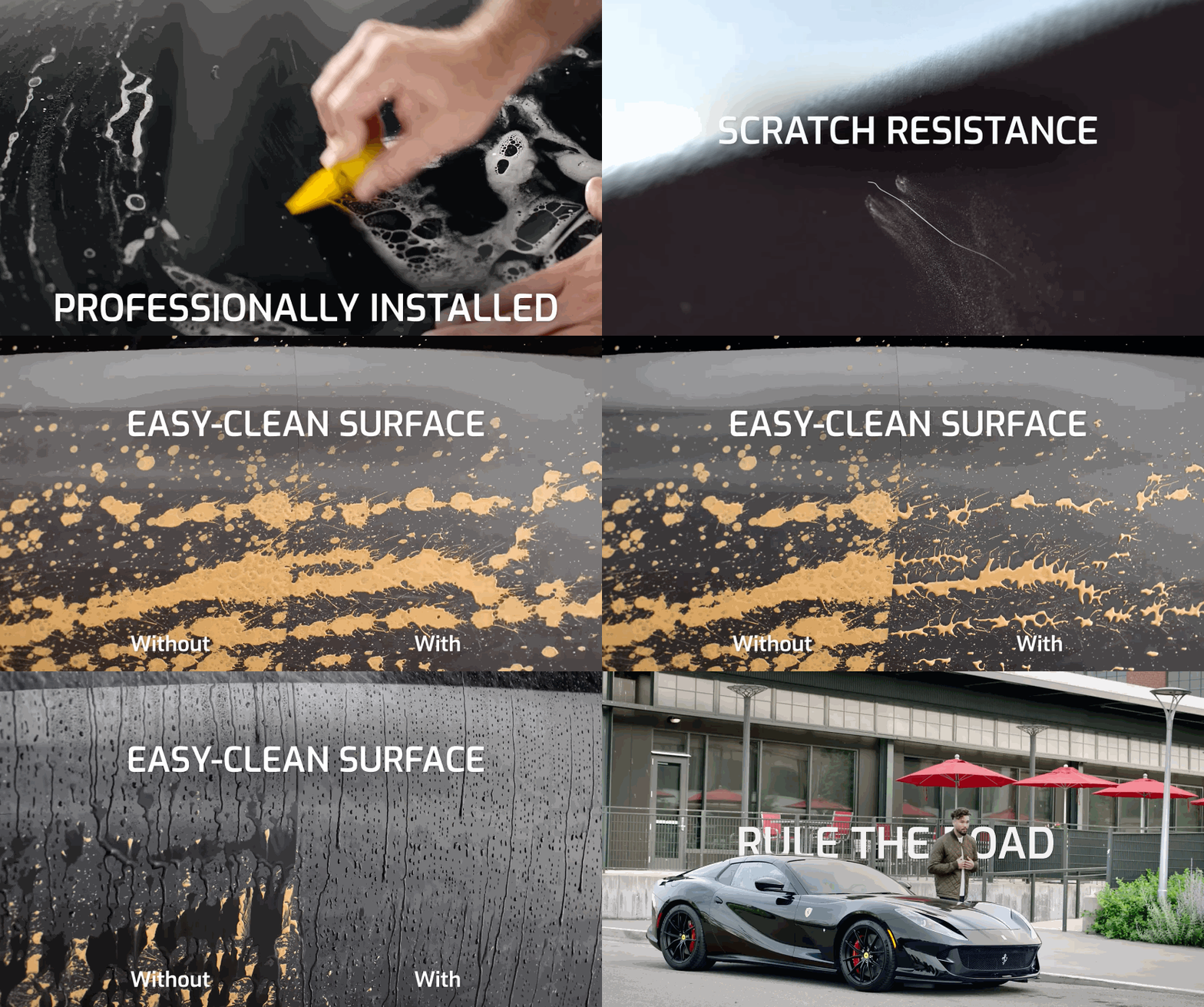
PPF is generally the more expensive investment because it involves specialized protective film and labor-intensive installation, while ceramic coating typically provides a more affordable way to improve surface protection and maintenance. However, cost-effectiveness depends on what type of damage or inconvenience the owner wants to address.
When PPF Provides Better Value
PPF can be particularly worthwhile for new vehicles, luxury cars, and daily drivers exposed to frequent highway debris. Protecting the front bumper, hood, and other high-impact areas may help reduce the need for cosmetic paint repairs caused by minor road impacts.
The level of coverage also affects PPF cost. A partial-front package generally requires less material and labor than full-front or full-body protection.
When Ceramic Coating Provides Better Value
Ceramic coating cost is influenced by the product selected, vehicle size, paint condition, preparation requirements, and application process.
For owners primarily concerned with easier washing, improved gloss, and environmental resistance, ceramic coating may deliver more relevant benefits without the higher investment associated with extensive PPF coverage.
The most expensive protection package isn’t automatically the best choice. A vehicle’s condition, ownership plans, and driving environment should determine where the money is spent.
How Do You Choose Between PPF and Ceramic Coating for Your Car?
The right choice between PPF and ceramic coating depends on your driving habits, paint condition, parking environment, ownership plans, and protection priorities. A Florida vehicle that regularly encounters highway debris has different needs from one primarily exposed to sunlight, rain, and outdoor parking.
Consider how your vehicle is used:
- Daily highway commuters: PPF on the front bumper, hood, and other high-impact areas can help protect against rock chips and debris.
- Outdoor-parked vehicles: Ceramic coating can make cleaning easier and help manage environmental contamination.
- New cars: Early paint protection can help preserve the original finish before significant wear accumulates.
- Luxury and performance vehicles: Owners concerned about cosmetic condition may benefit from broader PPF coverage combined with ceramic coating.
- Long-term ownership: Choosing protection based on expected mileage and maintenance habits can provide more practical value over time.
An inspection is also useful before deciding. Existing scratches, oxidation, contamination, or previous paint repairs may affect the preparation required for either service.
At Classic Details Auto Spa, we help Orlando drivers compare protection options based on how they actually use their vehicles. Some owners benefit most from targeted paint protection film, others from professional ceramic coating, and some from combining both.
The objective is to recommend protection that addresses real concerns rather than assuming every car needs the most extensive package.
Conclusion: Should You Choose PPF or Ceramic Coating in Florida?
Choose PPF when protecting your vehicle against rock chips and physical road damage is the priority, and choose ceramic coating when easier cleaning, gloss, and environmental resistance matter most. For Florida drivers who want both benefits, combining the two can provide a more comprehensive approach to automotive paint protection.
Orlando’s intense sunshine, frequent rain, humidity, insects, and busy highways make protecting your vehicle’s finish a practical consideration. However, the right solution depends on where you drive, where you park, and how long you intend to keep the car.
Professional PPF installation and ceramic coating application are equally important to achieving consistent results. Proper preparation, material selection, installation techniques, and maintenance all influence how well either product performs.
Contact Classic Details Auto Spa to discuss paint protection film, ceramic coating, or a combination of both for your vehicle in Orlando, Florida.
Our team can help you choose the coverage and protection that best match your driving habits, vehicle condition, and long-term goals.